The short answer
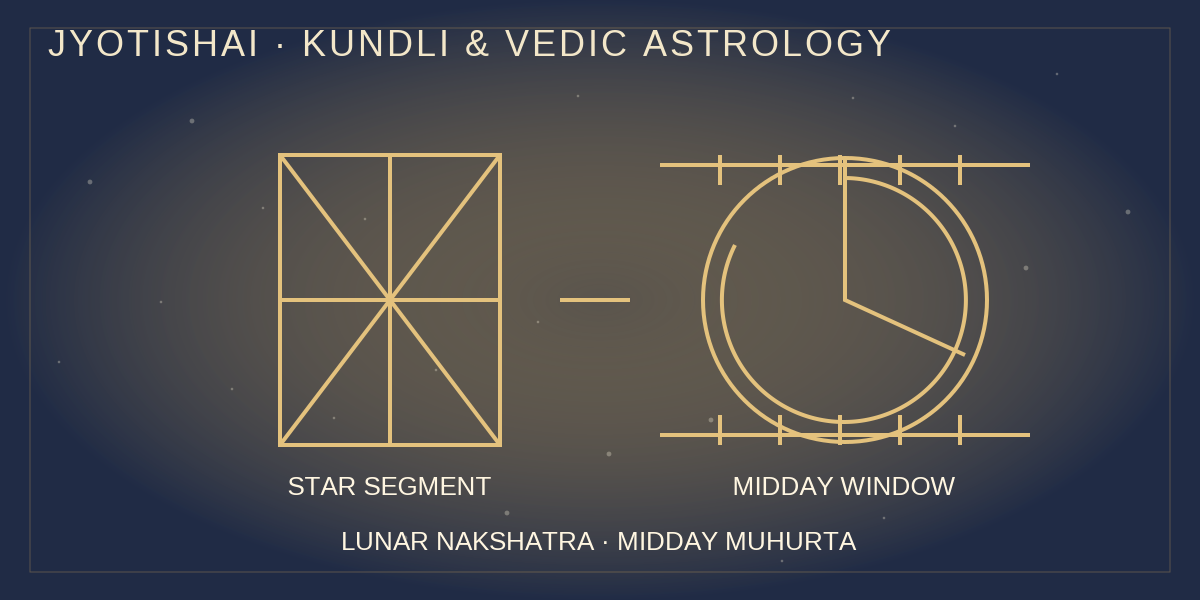
Abhijit Nakshatra and Abhijit Muhurta share a name but refer to different concepts. Abhijit Nakshatra is included in some historical or specialized 28-nakshatra systems; many everyday Jyotisha calculations use 27 equal divisions. Abhijit Muhurta is a daytime timing window in some Panchang traditions, calculated from daylight rather than from the Moon passing through a nakshatra. A page or calendar should tell you which one it means.
Why some lists count 27 and others 28
The familiar equal-space system divides the ecliptic into 27 sections of 13°20′ each. Historical calendar scholarship also describes unequal-space systems; one discussed system includes Abhijit between Uttara Ashadha and Shravana with a different span. So “add a 28th equal section” is not a safe summary of every older scheme. The system and text matter. Most contemporary birth-star and Vimshottari tools use the standard 27-count convention; specialized techniques may use Abhijit differently.
What Abhijit Nakshatra means in context
Abhijit is a Sanskrit term and a nakshatra name in some 28-part arrangements. Panchang services may show its Moon transit as a separate date-and-time entry, while other lists explicitly say that their routine count uses 27 nakshatras. Those presentations need not contradict one another: they can be using different categories or conventions. Do not assume a 28-part list replaces the standard 27 equal spans used in common natal and dasha calculations.
What Abhijit Muhurta means
Abhijit Muhurta is a time-of-day window, not a lunar position. Some contemporary Panchang implementations place it around the midpoint of local daylight and derive the time from sunrise and sunset. Its displayed clock time can shift by city and date. Traditions differ about when to use it and about exceptions; follow the convention your family or practitioner actually follows. A page that prints a single fixed clock time for every location may be simplifying the calculation.
A practical example
Suppose an app lists “Abhijit begins” at 11:45, while an article says Abhijit sits between Uttara Ashadha and Shravana. First check the labels: the clock time is likely Abhijit Muhurta, while the star segment is Abhijit Nakshatra. Then check the selected city, date, local time zone and the Panchang’s stated convention. This quick distinction prevents a time window from being read as the Moon’s nakshatra.
Questions to ask before relying on a calendar
Ask whether “Abhijit” means a nakshatra or a muhurta, which 27- or 28-count scheme the page uses, and whether an Abhijit timing is computed for your city from local sunrise and sunset. If you are following a family or temple practice, confirm the relevant rule with that tradition’s practitioner. A calendar label is not a guarantee that an activity will succeed or fail, and it should not delay urgent health, legal or safety needs.
A helpful distinction, not a verdict
The safest reading is to keep the name and the calculation separate: one is a lunar-mansion concept in certain systems; the other is a time window in some Panchangs. Regional and textual traditions differ. Use the term to ask a clearer question, not to create fear or pressure anyone into a costly ritual. Any muhurta preference is optional cultural guidance, not professional advice or a promise of an outcome.
Frequently asked questions
Are Abhijit Nakshatra and Abhijit Muhurta the same?
No. Abhijit Nakshatra is a lunar-mansion term used in some 28-count systems. Abhijit Muhurta is a daytime timing window calculated by some Panchangs.
Why do some sources list 27 nakshatras and others 28?
Many current calculations use 27 equal spans. Some historical or specialized schemes include Abhijit as an additional, differently sized segment. Check the source’s system.
Does Abhijit Muhurta happen at 12 noon everywhere?
Not necessarily. Some Panchangs calculate it from local daylight, so the clock time changes by date and place. Check the city and method.
Does an Abhijit timing guarantee a successful start?
No. It is an optional traditional timing preference, not a guarantee or substitute for practical planning.
Continue learning
Sources and context
- The Hindu Calendar, Indira Gandhi National Centre for the Arts digital archive: equal and unequal nakshatra systems and Abhijit
- Drik Panchang, 2026 Abhijit Nakshatra dates for New Delhi
- Drik Panchang, marriage nakshatra page stating the routine 27-count convention
- Panchang USA, Abhijit Muhurat and distinction from Abhijit Nakshatra
- Google Search Central, creating helpful, reliable, people-first content
Citations provide cultural or practical context; they do not endorse JyotishAI or validate astrological predictions.