The short answer
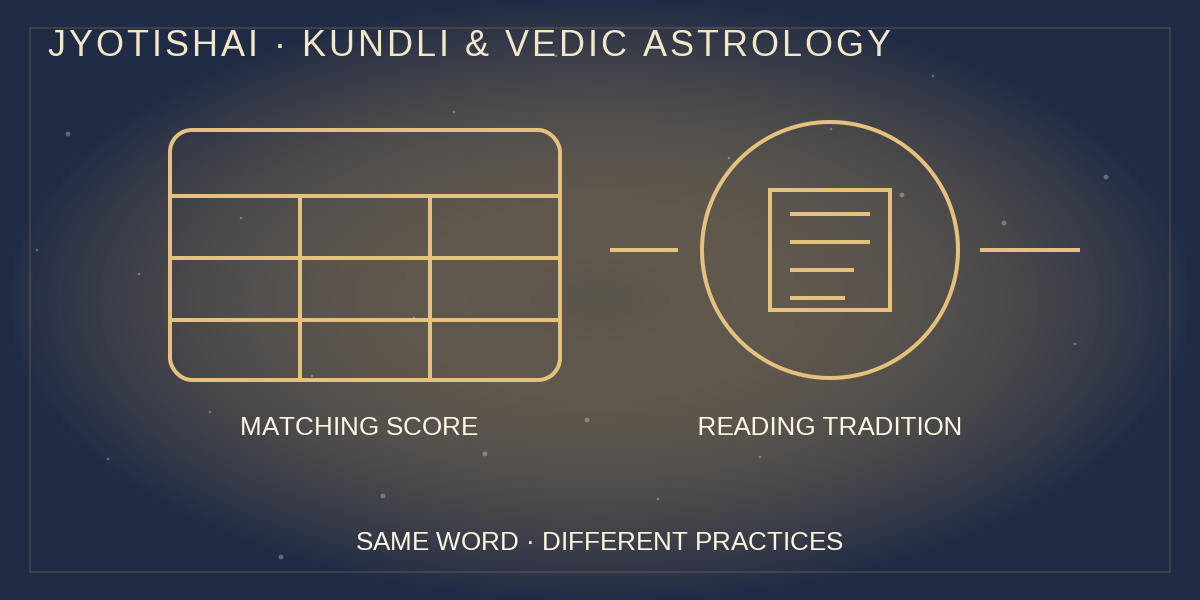
“Nadi” can appear in two different Jyotish conversations. In North Indian Ashtakoota or Guna Milan, Nadi Koota is one of eight traditional matching factors calculated from the partners’ birth-star categories. “Nadi astrology” is a broad label used for distinct divination traditions, including readings associated with texts or palm-leaf manuscripts. A zero score in Nadi Koota does not mean someone has received a Nadi reading, and a Nadi reading is not a Kundli matching score.
What Nadi Koota refers to in a match report
In an Ashtakoota report, eight kootas are scored from two people’s Moon signs or nakshatras under the chosen tables. AstroSage’s public matching page lists Nadi as one koota and assigns it a maximum of eight points out of 36. The exact presentation and interpretation can vary by calculator, text, regional practice and the birth details entered. Ask which matching method and table the report uses before treating its number as self-explanatory.
What the phrase Nadi astrology may refer to
Nadi astrology is not one single standardised procedure. The label is used for several traditions of divination, including practices in which a reader identifies or interprets a text associated with a seeker. Research by Sanskrit scholar Martin Gansten examines Nadi divination as a distinct textual tradition and describes its method and assumptions. That research also shows why broad origin stories should be attributed as tradition rather than repeated as verified ancient history. Ask the reader which specific tradition, text or method they mean.
Why the shared word can cause confusion
A report may say “Nadi Dosha” while a family member talks about a “Nadi reading.” They may be referring to unrelated activities: a compatibility category in an Ashtakoota table versus a separate divination session. The word alone does not establish that the systems share a calculation or that one confirms the other. A useful first question is: “Do you mean the Nadi Koota row in our matching report, or a Nadi reading tradition?”
What a Nadi Koota score does not establish
A matching score is an output of a traditional rule set, not a medical test, genetic screen, diagnosis or scientific measure of relationship quality. Do not use a Nadi label to infer fertility, health, a future child’s wellbeing or whether a relationship is safe. If a report makes medical or genetic claims, speak with a qualified health professional instead. If you are considering marriage, give greater weight to mutual consent, communication, respect, shared expectations and practical compatibility.
What to ask before relying on a report
Ask which birth details were used, which matching system and source table were followed, how the software handles uncertain birth times, and whether the result is a raw score or an astrologer’s interpretation. If two tools disagree, compare their inputs and conventions instead of assuming either is universally definitive. For a Nadi reading, ask what kind of material is consulted, what the session costs, what uncertainty remains and whether optional remedies are being offered. No one should pressure you with fear or a guarantee.
A calm example
Suppose a family sees a zero in the Nadi row of a 36-point matching report, while another person recommends a Nadi reading. Write down the two requests separately: first, clarify how the matching report computed that row; second, decide whether you want to explore a distinct divination practice at all. Neither step makes a medical finding or decides a marriage for you. You are free to ask for an explanation, seek a second opinion, or decline a service.
Keep cultural reflection separate from life decisions
These practices belong to different Jyotish contexts and are interpreted differently across communities. Learning their labels can help you ask clearer questions without turning a term into a verdict. Treat astrology as cultural or spiritual reflection, not as guaranteed prediction or professional advice. For health, reproductive, legal or financial matters, use qualified professional guidance and evidence appropriate to the decision.
Frequently asked questions
Is Nadi Koota the same as Nadi astrology?
No. Nadi Koota is one factor in some traditional Kundli matching systems. Nadi astrology is a broad label for separate divination traditions.
How many points does Nadi Koota carry?
AstroSage’s public Ashtakoota page assigns Nadi up to eight points out of 36. Other systems and interpretations may differ, so check the method used by your report.
Does a Nadi Dosha score diagnose a health or fertility issue?
No. A traditional matching score is not a medical or genetic assessment. Ask a qualified health professional about health or fertility concerns.
Should a Nadi Koota result decide whether I marry someone?
A score cannot decide a relationship for you. Consider consent, communication, respect, shared values and practical compatibility; use any astrological consultation as optional cultural reflection.
Continue learning
Sources and context
- AstroSage, Horoscope Matching: Ashtakoota categories and Nadi score in a public match report
- Martin Gansten, “Nāḍī Divination and Indian Astrology” (scholarly discussion of the separate Nadi divination tradition)
- Lund University Research Portal, “Patterns of Destiny: Hindu Nāḍī Astrology” (doctoral research record)
Citations provide cultural or practical context; they do not endorse JyotishAI or validate astrological predictions.