The quick distinction
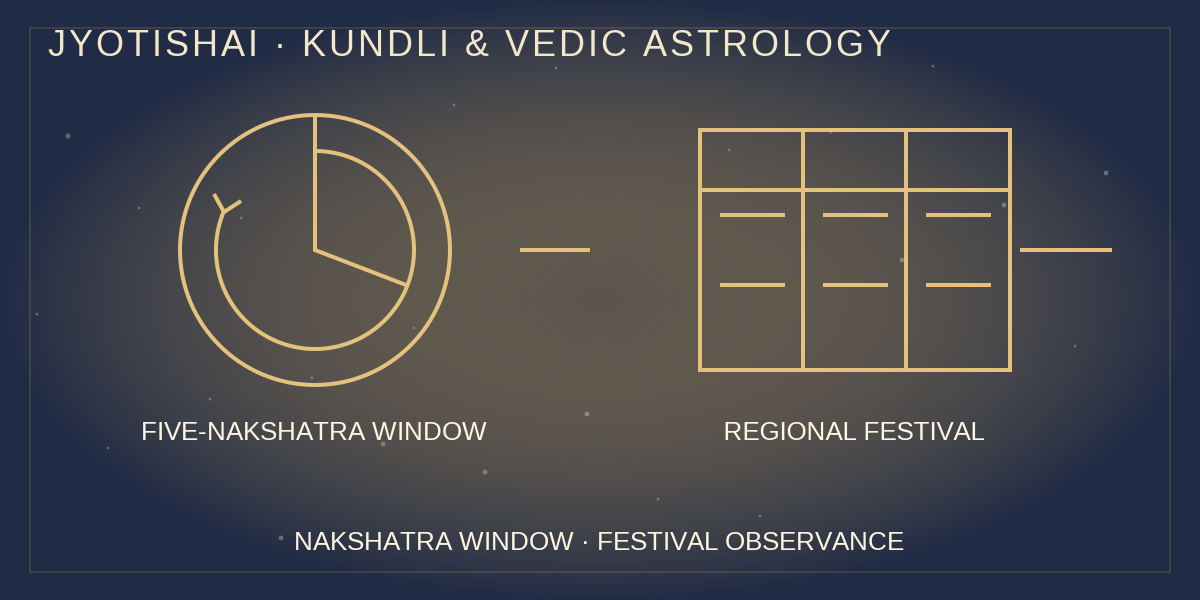
“Panchak” is used in Jyotisha and Panchang calendars for a recurring interval associated with the Moon’s passage through a group of five nakshatras near the end of the zodiac. “Yama Panchak” is also used for a five-day observance connected with Diwali-season customs in Nepal and some parts of northern India. The names overlap, but the calendar basis and cultural setting are not automatically the same. Always check which meaning a date table or family member intends.
Panchak in a Panchang
AstroSage describes Panchak through Dhanishtha, Shatabhisha, Purva Bhadrapada, Uttara Bhadrapada and Revati. Different calendars can state the boundary differently—for example, some begin within Dhanishtha rather than at the whole nakshatra’s start—so a location-specific Panchang is more useful than copying a time from another city. Drik Panchang’s date table identifies its city setting and lets readers change the location and year.
What Yama Panchak may refer to
In recent festival coverage, Yama Panchak refers to a five-day sequence around the Diwali period associated with observances such as honoring crows, dogs and other relationships with animals. AstroSage’s 2026 account connects the sequence with Tihar in Nepal and related customs in parts of northern India. The days, names and practices vary by region, calendar reckoning and community. Do not assume that every family or temple observes the same sequence.
Why search results can look contradictory
A search for “Panchak dates” may return a recurring Moon-and-nakshatra timetable; a search for “Yama Panchak” may return a festival schedule. Some pages also use “Panchak” for a family of named muhurta categories. Headlines can compress those meanings, and annual articles may mix a local date with a broad explanation. Before acting, read whether the page is discussing nakshatra timing, a seasonal observance or a particular local custom.
How to check a Panchak time
For the recurring calendar period, confirm the city, date, local time zone and the Panchang’s stated start and end convention. Panchang days are often described relative to local sunrise, and a nakshatra can begin or end during the civil day. If you are following a family or temple tradition, ask the practitioner which calendar and boundary rule they follow. A table set to Delhi is not automatically the right table for Chennai, London or your own location.
A practical example
Suppose a relative says a house ceremony falls during Panchak, while a calendar app shows Yama Panchak dates near Diwali. First ask which one they mean. If they mean the recurring nakshatra period, compare the Panchang calculation for the ceremony’s city and date. If they mean a five-day festival observance, ask which regional custom the household follows. That small clarification prevents using a festival list as a muhurta clock, or treating a timing category as a festival rule.
Use customs without fear
Astrological and ritual practices are interpreted differently across communities. A calendar label is not evidence that a journey, ceremony or ordinary responsibility will cause harm. Do not delay urgent care, safety work, legal deadlines or essential travel because of a calendar warning. If a muhurta matters to your family, use it as a preference when practical arrangements already allow it, and avoid anyone who uses fear to pressure you into a purchase or remedy.
What to remember
The simplest check is: Panchak in a Panchang usually points to a Moon-and-nakshatra interval; Yama Panchak can point to a regional Diwali-season observance. Both terms live within diverse traditions, and neither has one universal presentation across every calendar. Read the page’s location, dates, terminology and source before relying on a timetable.
Frequently asked questions
Is Panchak the same as Yama Panchak?
Not necessarily. Panchak commonly names a recurring nakshatra interval in a Panchang. Yama Panchak is also used for some regional Diwali-season observances. Check the context and calendar source.
Which nakshatras are associated with Panchak?
AstroSage lists Dhanishtha, Shatabhisha, Purva Bhadrapada, Uttara Bhadrapada and Revati. The precise boundary used for Dhanishtha can vary between calendar conventions.
Do Panchak timings change by city?
Yes. Local time, date boundaries and the selected Panchang calculation matter. Use a source set to the event’s city and note its stated conventions.
Should I cancel important work during Panchak?
A calendar label cannot establish that harm will occur. Follow essential safety, health, legal and work needs; treat any timing preference as optional cultural practice.
Continue learning
Sources and context
- AstroSage, Panchak Muhurat Demystified (definition, five nakshatras and variation in activity interpretations)
- Drik Panchang, 2026 Panchak dates for New Delhi (location-aware calendar table)
- AstroSage Magazine, Yama Panchak 2026: Significance, Dates & Sacred Rituals (regional Diwali/Tihar context)
- Google Search Central, Creating helpful, reliable, people-first content
Citations provide cultural or practical context; they do not endorse JyotishAI or validate astrological predictions.