The short answer
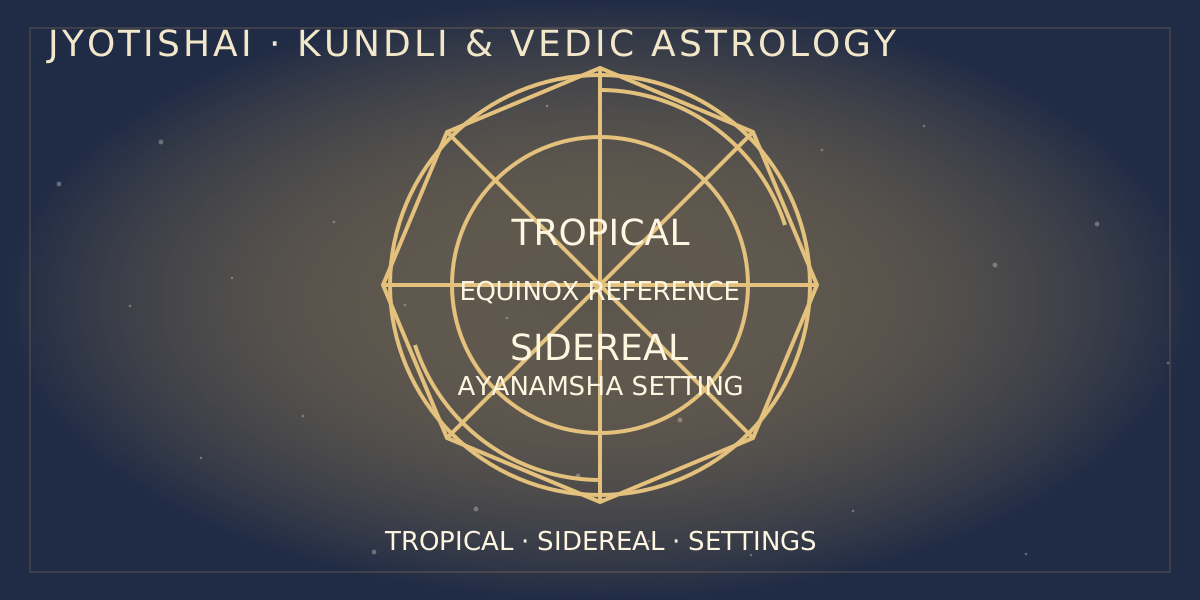
A birth chart can show different sign placements in Vedic and Western astrology because the systems may use different zodiac reference points and interpretive methods. Many Jyotisha charts use a sidereal zodiac with a stated ayanamsha; many modern Western charts use a tropical zodiac anchored to the equinoxes. The birth moment is the same, but the framework used to label positions can differ. First check the method and settings; do not assume that one chart is a software error or that one tradition is universally “more accurate.”
What “tropical” means
The tropical zodiac sets the beginning of Aries at the March equinox and measures the twelve equal sign divisions from that seasonal reference. It is a coordinate convention used by many Western astrologers. Zodiac signs in this framework are not identical to the visible constellation boundaries: the twelve signs are equal divisions, while constellations have uneven apparent sizes. A tropical chart can therefore be described without claiming that its sign labels are a direct map of constellation borders.
What “sidereal” and ayanamsha mean
A sidereal zodiac relates its sign divisions to a stellar reference. In Indian Jyotisha, calculators commonly apply an ayanamsha: an offset used to relate tropical and sidereal longitudes. Different ayanamsha choices exist, so two sidereal calculators can still differ near a sign or Nakshatra boundary. Ask which ayanamsha and chart convention a tool uses. The term “Vedic” is used broadly in modern settings, and practices are not perfectly uniform across every astrologer or lineage.
Why your Sun sign or Moon sign may change
A common source of confusion is comparing unlike things—for example, a tropical Sun sign from a newspaper-style zodiac page with a sidereal Moon sign (Janma Rashi) from a Kundli. Even when comparing the same planet, the zodiac reference can place it in a different sign. A practical example: one screen may show “Sun sign” while another shows “Moon Rashi”; those labels refer to different chart points as well as possibly different systems. Record both the planet and zodiac method before comparing.
A fair comparison checklist
Write down the date, recorded local birth time, birthplace and time zone entered in each chart. Then note whether each result uses tropical or sidereal positions, the ayanamsha if stated, and which point the label describes (Sun, Moon or Lagna). Confirm whether both charts are natal charts rather than one being a divisional or transit chart. If a birth time is approximate, keep that uncertainty visible, especially for time-sensitive factors. This turns “my signs changed” into a concrete settings question.
Which system should you use?
Choose the tradition that matches the question you want to explore and the practitioner or source you trust. You can learn about both as distinct symbolic frameworks without mixing labels accidentally. A careful explanation tells you which chart factor, calculation settings and interpretive tradition it uses. No zodiac label should decide a relationship, medical treatment, financial choice or other major life decision for you. Use astrology as cultural or personal reflection, alongside practical information and your own judgment.
Frequently asked questions
Is Vedic astrology always sidereal and Western astrology always tropical?
Those are common conventions, not an exception-free rule. Some practitioners choose other settings, so check the calculator or astrologer’s stated method.
Why is my Vedic Sun sign different from my Western Sun sign?
The two charts may use sidereal and tropical zodiac references. Confirm that both labels refer to the Sun and compare the settings shown by each source.
Does a different sign prove that one chart is wrong?
No. Different sign labels can follow from different coordinate conventions or inputs. Check date, local time, place and settings before diagnosing an error.
What is an ayanamsha?
It is an offset used in many sidereal calculations to relate tropical and sidereal longitudes. Different choices can matter near a sign boundary.
Continue learning
Sources and context
- Astrodienst Astrowiki: Sidereal Zodiac
- Astrodienst: Ayanamshas in Sidereal Astrology
- University of Lucknow: The Differences between Western and Vedic Astrology (academic paper)
- Google Search Central: Creating helpful, reliable, people-first content
Citations provide cultural or practical context; they do not endorse JyotishAI or validate astrological predictions.